Architects balance design vision with real-world structural and operational demands. When specifying high-performance doors for demanding environments, performance extends beyond opening speed. Many manufacturers focus on cycles per second as the primary metric, but this overlooks critical failure points, such as doors that deflect under the weight of custom cladding or fail within years of high-traffic use.
This guide outlines the essential criteria for specifying a door engineered for long-term, reliable performance.
Redefining Performance in Architectural Design Beyond Speed
Speed-focused definitions of high-performance doors fall short when doors sag under the weight of architectural cladding or leak during storms. Actual performance encompasses structural integrity, operational consistency, environmental durability and aesthetic precision. These four criteria determine whether a door system meets the demands of aviation hangars, coastal commercial buildings, industrial facilities and luxury residential projects.
Structural Load Capacity
Door frames must provide the structural rigidity necessary to support heavy, custom cladding without deflection or operational compromise. Steel framing systems engineered for specific dead loads prevent the frame twisting and glass cracking that plague lightweight aluminum alternatives under similar weight conditions.
When cladding weight exceeds a certain amount, frame deflection becomes a critical concern. Even minimal deflection creates stress concentrations that crack glass, separate seals and bind mechanical components. Engineered steel frames distribute loads through the entire frame assembly rather than concentrating stress at hinge points or header connections.
Operational Reliability
Reliable operation means smooth, silent and consistent movement across thousands of cycles. Hydraulic systems deliver controlled soft-start and soft-stop motion that protects building structures from shock loads while maintaining precise positioning. This operational consistency matters particularly in high-traffic environments where erratic movement creates safety concerns and accelerates component wear.
Consider a retail entrance cycling 50 times daily. Over a decade, that door will complete more than 180,000 operations. Systems lacking consistent control accumulate wear asymmetrically, leading to binding, noise and eventual mechanical failure long before reaching design service life.
Environmental Resistance
Durable commercial doors must withstand wind loads under both positive and negative pressure, resist coastal salt-air corrosion, and maintain seal integrity during temperature fluctuations. These doors meet the same rigorous environmental standards used in mining, agriculture and industrial applications.
Coastal installations face particularly aggressive conditions. Salt-laden air accelerates corrosion of unprotected steel components, while wind-driven rain tests seal integrity under sustained pressure. Temperature cycling between heated interior spaces and exterior conditions causes expansion and contraction, which stresses seals and fasteners. Doors used in harsh environments must be engineered with these extreme conditions in mind to deliver reliable, lasting performance.
Aesthetic Integration
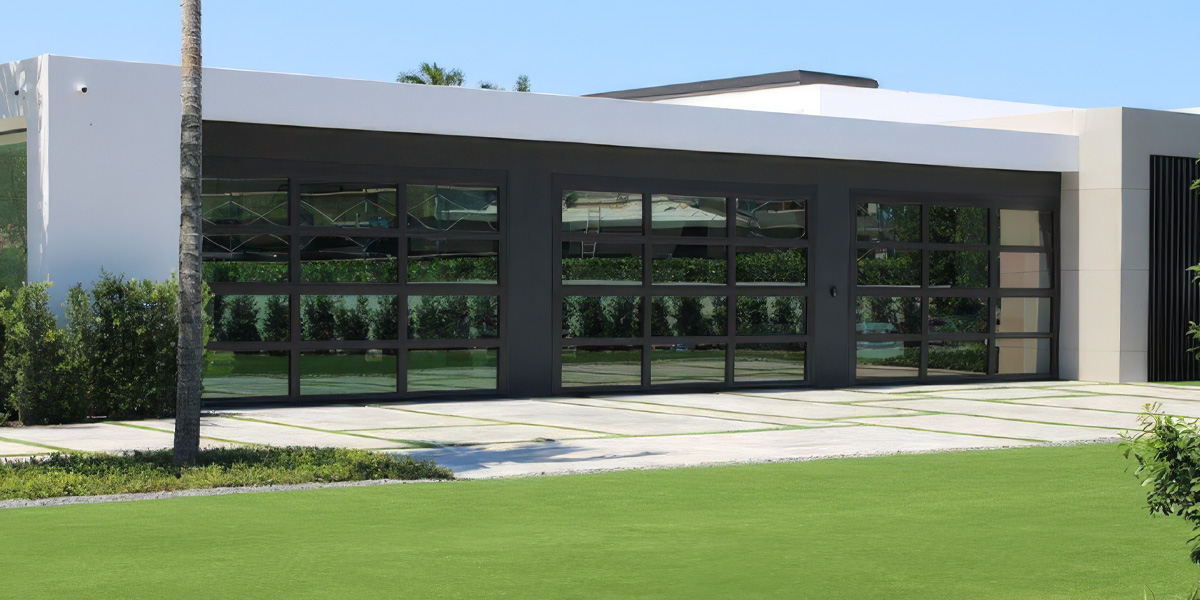
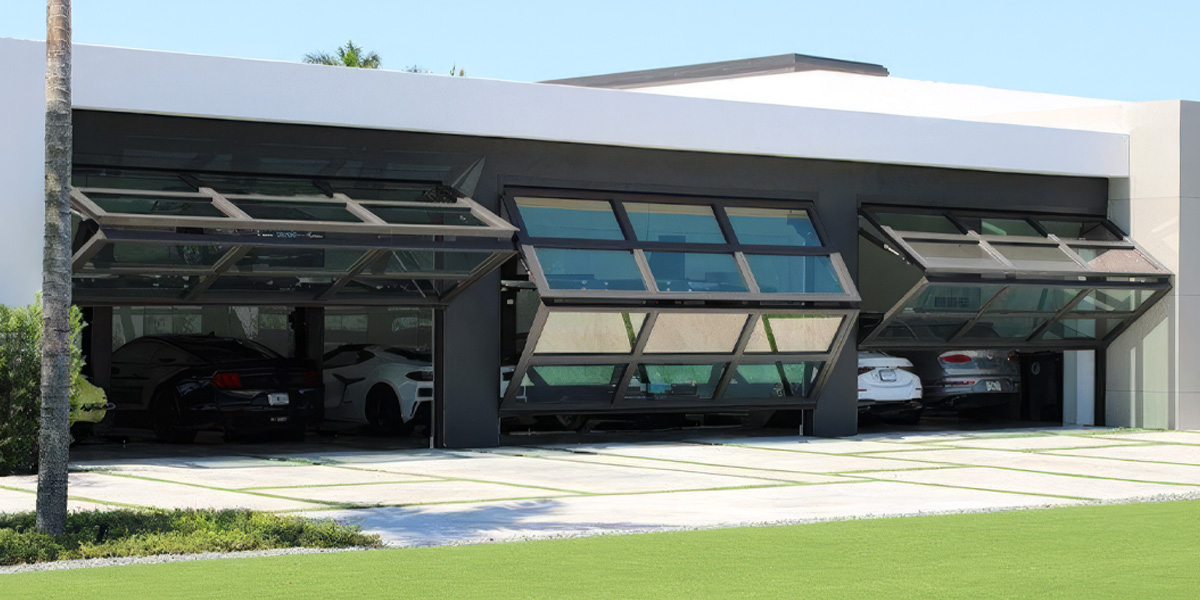
Architects require door systems that blend into the design intent, with minimal visible hardware and uninterrupted facades. The Zero Hinge™ design eliminates external hinge visibility, allowing for clean architectural lines while maintaining full structural performance. This approach supports the seamless aesthetic integration essential to contemporary commercial and residential architecture.
Hidden actuation systems preserve clean sight lines while eliminating visual clutter from exposed tracks, cables or mechanical components.
Key Specifications for Doors in Harsh Environments
Material selection and mechanical system design determine long-term performance in challenging conditions. Understanding the engineering differences between framing materials and actuation systems enables informed specification decisions that balance initial cost against life cycle performance.
Steel Framing vs. Aluminum
Steel and aluminum framing differ significantly in their performance characteristics for industrial door systems and large architectural openings. Steel provides superior rigidity, preventing glass cracking and seal failure under load. Aluminum lacks the structural capacity required for heavy cladding or large-scale applications, but it can make a lightweight and corrosion-resistant cladding option.
For openings exceeding standard commercial dimensions or incorporating custom materials, steel framing delivers the necessary structural integrity.

Hydraulic vs. Cable or Strap Systems
Systems that use cables or straps introduce wear-prone components that require regular maintenance. Cables fray, straps stretch, and spooling mechanisms demand periodic adjustment. Self-contained hydraulic cylinders operate as closed-loop systems with fewer moving parts, offering superior longevity in environments with grit, moisture or salt exposure. This mechanical simplicity translates to reduced maintenance requirements and extended service life.
Wind Load Ratings
Architectural door specifications must include specific pounds per square foot (PSF) ratings verified through engineering calculations. Wind load resistance applies to both open and closed positions, with particular attention to negative-pressure conditions that can compromise seals or cause structural stress. Manufacturers should provide documentation demonstrating tested performance under specified wind conditions relevant to the project location and building exposure.
Coastal and high-rise installations commonly face design wind loads exceeding 40 PSF. Doors must resist these pressures without seal failure or frame deflection that compromises weather protection. Specifications should address both sustained wind loads and gust conditions.
Designing for Durability in High-Traffic Door Solutions
Conventional commercial door systems rely on mechanical components prone to failure under sustained use. High-traffic door solutions require engineering approaches that minimize these failure points.
Common failure points in conventional systems include:
- Spring tension loss
- Track deflection
- Roller seizure
- Cable fraying
These failure modes compound over time, reducing operational reliability and increasing maintenance frequency. Systems that handle ambitious designs use proprietary bushing blocks rather than traditional hinges, eliminating the lubrication, maintenance and wear patterns associated with pin-and-barrel hinge assemblies. This design approach reduces mechanical complexity that can lead to premature failure in demanding applications.
This mechanical efficiency places less stress on building structures while providing more predictable life cycle performance.
The Architect’s Specification Checklist
Verify these five criteria when evaluating door systems to ensure long-term project performance and avoid costly mid-project modifications or premature replacement.
What Is the Required Wind Load Rating?
Confirm the manufacturer provides engineering calculations specific to the project location and building exposure. Generic ratings without supporting documentation indicate inadequate engineering rigor. Request third-party testing verification for critical applications or locations subject to hurricane or high-wind conditions.
What Is the Weight and Material of the Custom Cladding?
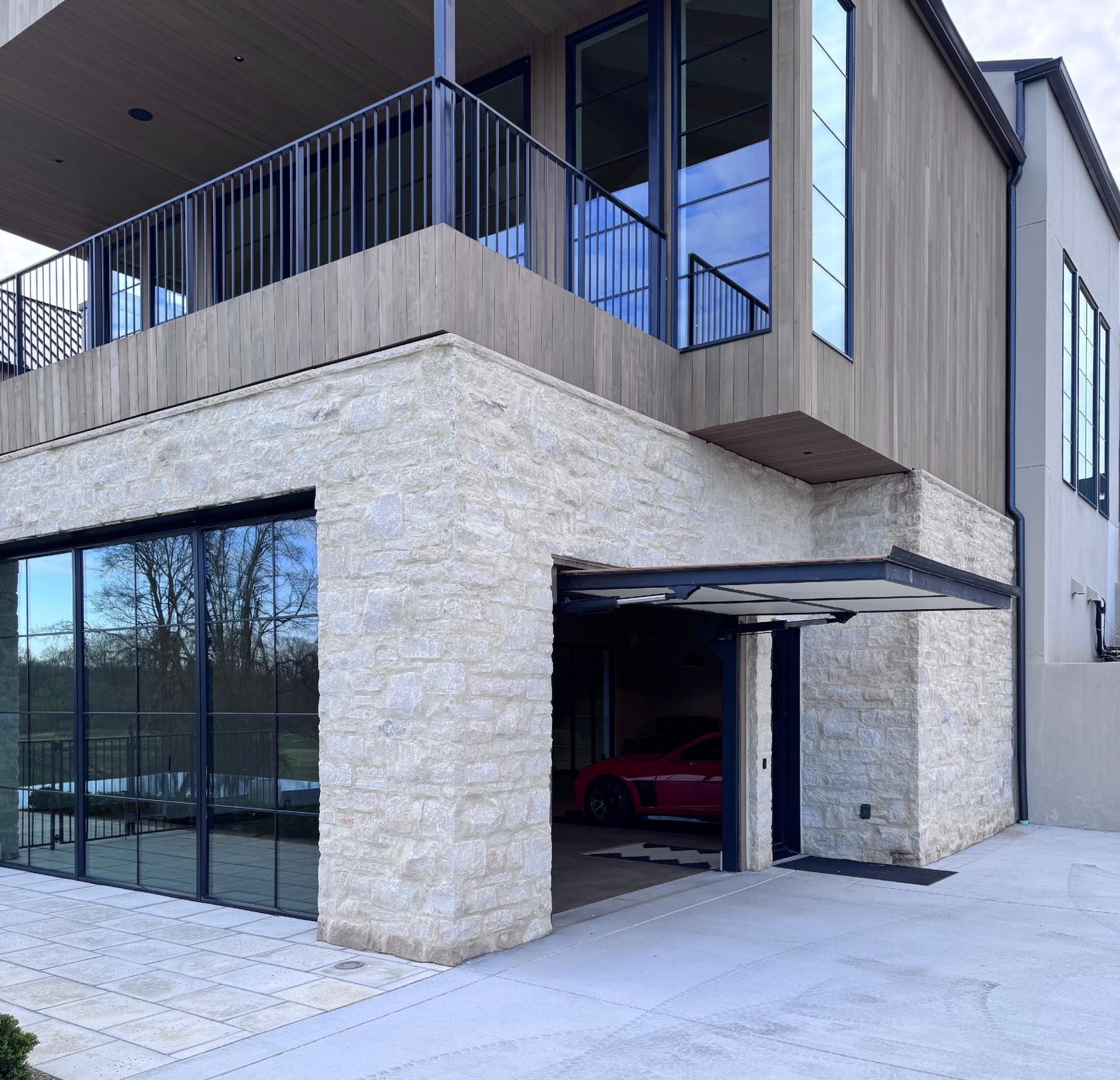
Frame engineering must account for specific dead loads, not generic weight estimates. Verify the frame is designed for your exact cladding specification, including attachment methods and load distribution. Cladding materials such as stone veneer or thick glass panels require detailed engineering analysis.
Does the System Use Hydraulics or Wear-Prone Parts Like Straps and Cables?
Prioritize hydraulic actuation to reduce maintenance and extend service life, especially in harsh environments or high-cycle applications. Cable systems may offer lower initial costs but incur higher life cycle expenses due to maintenance and earlier replacement.
Is the Door Frame Engineered to Support the Full Weight Independently?
Avoid systems that rely primarily on building headers for structural support. Self-supporting frames reduce structural requirements and installation complexity while providing greater flexibility in building design. Independent frame support also simplifies future modifications or replacement.
Does the Manufacturer Provide Detailed Spec Sheets?
Comprehensive architectural door specifications, including CAD files and BIM integration, support accurate project coordination and reduce construction conflicts. Digital models enable clash detection during design phases, preventing costly field modifications during construction.
The Solution Is Premier Door Co.’s Engineered Systems
At Premier Door Co., we engineer architectural solutions. From our U.S. manufacturing facility in Stewart, Minnesota, we design and build custom-engineered hydraulic and electric door systems for aviation hangars, industrial facilities, luxury residential projects and retail applications. Our proprietary Smart Door® Technology integrates seamlessly with building management systems, while our Zero Hinge Collection® delivers the clean aesthetics architects demand.
Every system is custom-designed to your project specifications, with in-house engineering that eliminates delays and ensures project reliability. Contact our design engineering team to discuss the specifications for your next high-performance project.